For Men Weighing Ashwagandha Benefits: Check the Dose Before You Buy
The cautious sources hedge on testosterone and fertility, and NIH calls the sleep benefits small. The number to hold a label against is 500 to 600 mg of ashwagandha a day, with sleep effects seen at 600 mg or more over at least 8 weeks.
The firmest figure behind ashwagandha benefits for men is a dose, not a result. The National Institutes of Health (NIH) Office of Dietary Supplements (ODS) reports it from stress and anxiety studies that ran 6 to 8 weeks. In some of them, ashwagandha seemed more effective at 500 to 600 milligrams (mg) a day than at lower doses.
For sleep, the bar is 600 mg or more a day for at least 8 weeks. That adds up to at least 33.6 grams in your supply.
The claims about testosterone, libido and fertility rest on softer words. The cautious sources say “might”, “could” and “inconsistent”, while a clinic blog says “effective”. The table further down puts each source’s wording side by side.
This page summarizes public health sources and is not medical advice. If you take a prescription medicine or manage a health condition, read the provider questions near the end before you buy.
Verdict: Ashwagandha Is Better Supported for Stress Than for Testosterone
Verdict: ashwagandha is best supported for stress, per NIH ODS and Harvard Health, so buy it only if you will check the label dose.
The flaw: Verywell Health calls the evidence for erectile dysfunction (ED) and infertility “inconsistent.” The fix: judge a bottle by the NIH ODS doses below.
Strengths: lower stress hormone levels in studies, and no safety concerns in studies of up to about 3 months, per NIH ODS.
Who should skip: men buying it for ED, which has no confirmed human benefit, should see a provider instead. Skip it too if you have prostate cancer, where NIH ODS says it may not be safe.
Ashwagandha Supplements Are Root or Root-and-Leaf Extracts
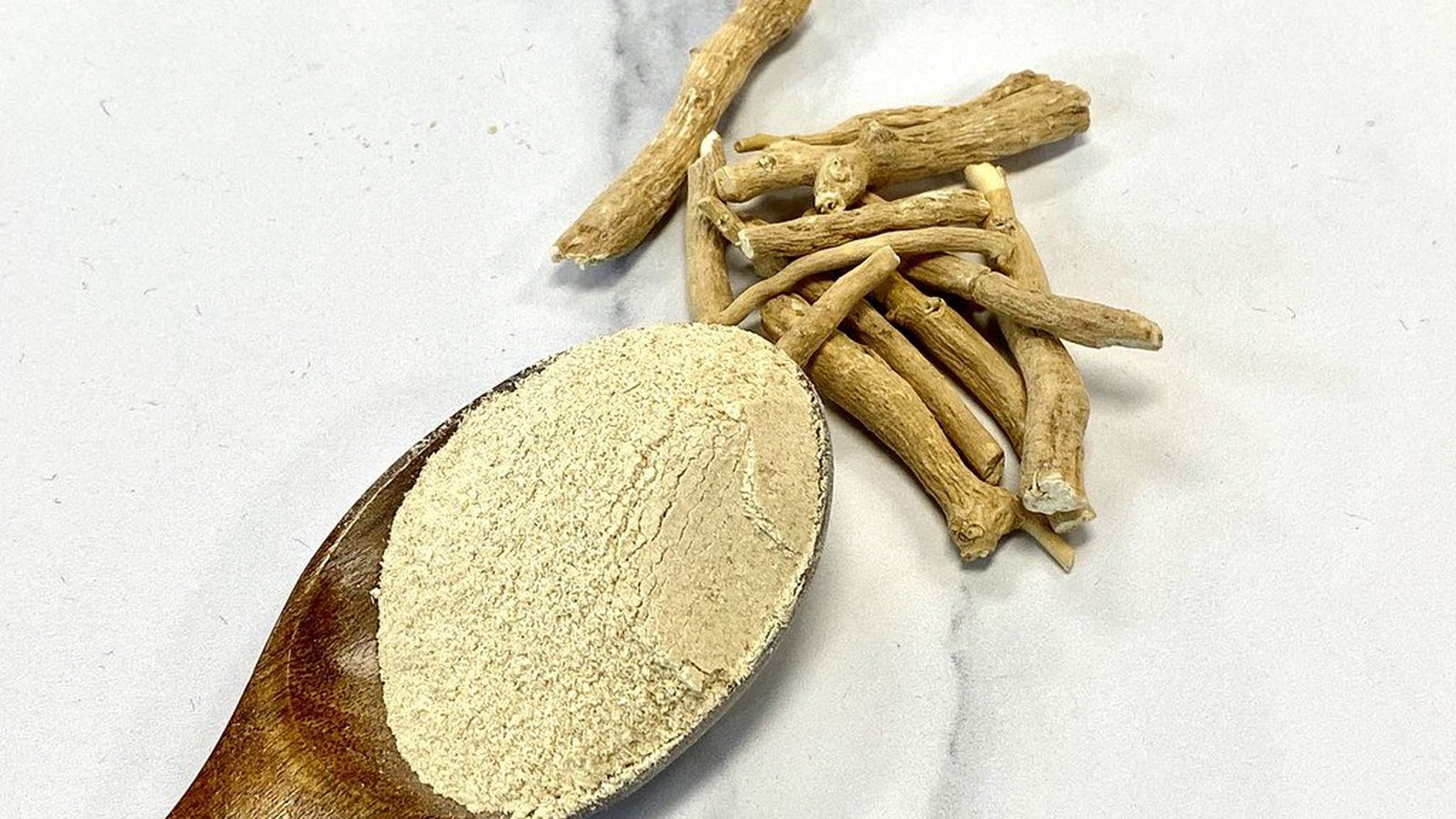
Ashwagandha is a plant. Supplements usually contain extracts of its roots, or of its roots and leaves, per NIH ODS. Extracts are usually standardized to withanolides, a family of plant compounds, per the Marion Gluck Clinic blog.
That withanolide figure is not the dose. NIH ODS gives milligrams of ashwagandha per day, from studies that used “many different types and doses” of extracts. Read that figure on the Supplement Facts panel, the label box listing each active ingredient and its amount per serving (NIH ODS supplement guide).
If the herb sits inside a proprietary blend (a mix that lists only its total weight), you can’t check how much ashwagandha a serving holds.
Testosterone, Libido and Fertility: Marketing Language vs. Hedged Evidence
The firmest wording comes from a clinic blog, not from a review of trials. The Marion Gluck Clinic’s blog says ashwagandha “is effective in regulating hormones and the immune system, relieving stress, increasing energy levels and improving concentration.” The clinic also says it often includes ashwagandha in its testosterone replacement therapy plans.
Verywell Health is more careful. It says ashwagandha “might increase testosterone levels in men” and “could enhance sperm count and motility,” meaning how well sperm move. Both verbs hedge, even though the article cites measured results.
A 2018 study followed 43 older, overweight men. Their testosterone rose 15% during an 8-week ashwagandha phase. An older study followed 46 young men with infertility. Their sperm count rose 167% after 90 days of an ashwagandha extract.
For ED, Verywell says benefits showed up in rats but “haven’t been confirmed in humans,” and men with stress-driven ED saw no benefit. It also says ashwagandha is “marketed as a remedy for erectile dysfunction and infertility,” but the “evidence remains inconsistent.” So an ad that promises higher testosterone goes further than this source does.
Stress and Cortisol: NIH ODS Reports Lower Stress Hormone Levels
Stress is where NIH ODS reports a measured change. In several studies, people who took ashwagandha for 6 to 8 weeks reported less stress, anxiety, fatigue and sleeplessness, per the NIH ODS fact sheet. It adds: “Ashwagandha also lowered stress hormone levels.”
Harvard Health is more cautious: “Some evidence suggests that ashwagandha affects levels of the stress hormone cortisol.” In some of the NIH ODS studies, 500 to 600 mg a day appeared more effective than lower doses. Check any stress-themed label against that range.
Sleep: Small Benefits at 600 mg a Day for at Least 8 Weeks
For sleep, the NIH ODS summary says ashwagandha seemed most helpful at 600 mg per day or more, taken for at least 8 weeks. It also says: “Overall, the benefits for sleep were small.”
Both details set a bar for a product. A daily amount under 600 mg does not match the dose NIH ODS describes for sleep. A supply that runs out before day 56 does not match the duration.
Label Math: Matching a Supplement Facts Panel to 500-600 mg per Day
Five lines of arithmetic show whether a bottle matches the doses in the studies NIH ODS summarizes:
- Find the ashwagandha line and check that it names a root or root-and-leaf extract, not plain powder. Note the mg per serving.
- Servings per day = your target dose ÷ mg per serving.
- Days per bottle = servings per container ÷ servings per day.
- Bottles needed = days in your plan ÷ days per bottle.
- Cost per day = price on the brand’s own page ÷ days per bottle.
For stress, 500 mg × 42 to 56 days = 21,000 to 28,000 mg, or 21 to 28 g. For sleep, 600 mg × 56 days = 33,600 mg, or 33.6 g. Multiply mg per serving by servings per container to see what one bottle holds.
If the result is below your total, one bottle will not cover the plan.
The same divide-and-multiply check works on other supplements, as in creatine supplement label math.
Only the Clinic Blog States Its Claims Without a Hedge
Read across each row. The further a source’s words are from “small” and “inconsistent”, the more it promises beyond the cautious summaries.
| Claim | Source | Exact wording | What the wording commits to |
|---|---|---|---|
| Hormones, stress, energy | Marion Gluck Clinic blog | “effective in regulating hormones” and “relieving stress” | A firm claim, no hedge |
| Clinic dose | Marion Gluck Clinic blog | “standardised root extract capsules (250 – 500 mg daily)” | Top end is 100 mg below the NIH ODS sleep minimum (computed) |
| Testosterone and libido | Verywell Health | “might increase testosterone levels in men” | A possibility |
| Sperm and fertility | Verywell Health | “could enhance sperm count and motility” | A possibility |
| Erectile and fertility claims | Verywell Health | “evidence remains inconsistent” | Mixed evidence |
| Stress and cortisol | Harvard Health | “some evidence suggests” an effect on cortisol | Hedged |
| Sleep | NIH ODS | “the benefits for sleep were small” | A small effect |
| Sleep dose | NIH ODS | “600 mg per day or more for at least 8 weeks” | A minimum dose and duration |
| Stress dose, 6-8 week studies | NIH ODS | “500 to 600 milligrams (mg) per day” | More effective than lower doses in some studies |
| Supply total (computed) | NIH ODS figures | Stress: 500 mg × 42-56 days = 21-28 g; sleep: 600 mg × 56 days = 33.6 g | How much a supply must hold |
The stress and sleep doses you can check a label against come from NIH ODS.
Questions to Ask a Health Care Provider Before Starting
The NIH ODS guide to dietary supplements advises talking to your health care providers before taking any dietary supplement. Bring the bottle and these questions from the ashwagandha fact sheet:
- It might interact with thyroid, diabetes and blood pressure medicines, sedatives and immune-suppressing drugs. Do I take any of these?
- It may not be safe for people with prostate cancer. Does a condition I have rule it out?
- It may affect how the thyroid gland works. Should anything be checked before I start?
- Extracts have been linked to liver injury in some people. What should make me stop and call you?
- Is the study dose sensible for me, and for how long?
Next step: Compare other supplements on the same dose-and-label terms in ingredient evidence.
Ashwagandha Questions Men Ask
Does ashwagandha raise testosterone?
The cautious sources don’t go that far. Verywell Health says only that it “might.”
How long is ashwagandha safe to take?
Studies found no safety concerns for up to about 3 months, per NIH ODS. Whether longer use is safe isn’t clear.
What side effects are common?
NIH ODS lists upset stomach, loose stools, nausea and feeling drowsy, and says they are usually mild.
Who should check with a clinician before taking ashwagandha?
Every man should, per the NIH ODS supplement guide. Raise prostate cancer and any thyroid, diabetes, blood pressure, sedative or immune-suppressing medicine first.
Sources
- https://www.health.harvard.edu/medications-and-treatments/ashwagandha-benefits-side-effects-and-safety-concerns
- https://www.mariongluckclinic.com/blog/ashwaganda-health-benefits-for-men-libido-energy-more/
- https://www.verywellhealth.com/ashwagandha-for-erectile-dysfunction-5198850
- https://ods.od.nih.gov/factsheets/Ashwagandha-Consumer/
- https://ods.od.nih.gov/factsheets/WYNTK-Consumer/